
A leaking oil cooler. A warped charge-air cooler. A core that looks perfect but fails the helium leak test at 1×10⁻⁹ Pa·m³/s. In aluminum vacuum brazing, these failures are rarely random. They are the predictable output of a broken link in a five-step chain.
At Wuxi BAP Cooling Tech we braze aluminum plate-fin heat exchangers in-house — oil coolers, water coolers, and charge-air coolers for hydraulic, construction, and wind-power systems. Over years of production we drove brazing rejects down to a statistical floor by treating quality as a closed loop, not a hope.
The five failure modes we design against: **oxidation, incomplete bonding, filler erosion, distortion, and leakage.** Every one maps to a control point below.
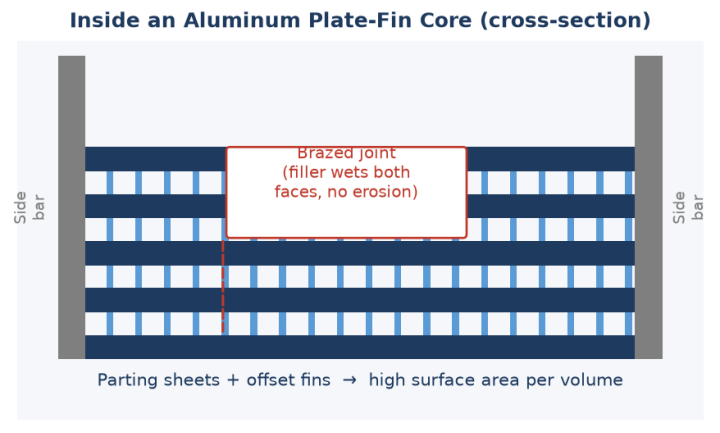
Figure 1 — Cross-section of an aluminum plate-fin heat exchanger core
1. Material and Design: Match Before You Braze
Quality starts on the drawing and the bill of materials.
- **Base material:** 3003 anti-corrosion aluminum. Avoid high-copper alloys — copper promotes liquid-metal embrittlement and accelerates filler erosion during brazing.
- **Filler:** 4104 (Al–Si–Mg) is our default. Melting range 595–605°C, good flow, low erosion. Composite clad layer 0.10–0.15 mm.
- **Fin-to-plate gap:** 0.02–0.06 mm. Beyond 0.08 mm you get incomplete brazing (cold joints) because capillary action cannot bridge the gap.
- **Side-bar corner radius:** R ≥ 1.5 mm to avoid stress-concentration cracks.
- **Large cores (>500 mm):** add support to prevent sagging under high-temperature creep.
The point: you cannot braze your way out of a bad design. Get the material pair and the gaps right first.
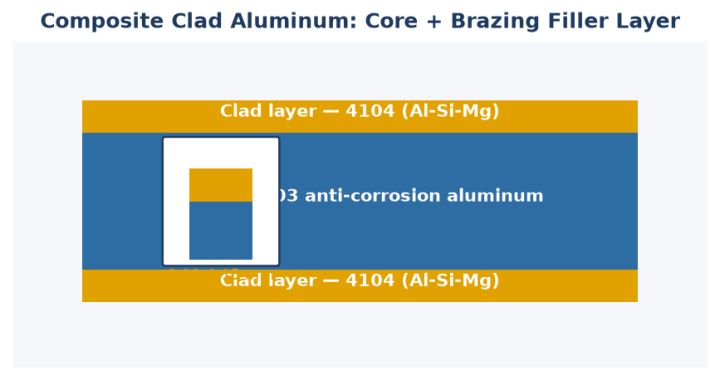
Figure 2 — Composite clad aluminum structure: 3003 core + 4104 filler clad layer
2. Pre-Braze Cleaning: The Most Underrated Step
Most “mysterious” brazing defects are contamination. Oxide film, cutting oil, and moisture are the three killers.
- **Degreasing:** alkaline solution (5–6% NaOH) at 50°C, soak 2–5 min, rinse.
- **Oxide removal:** 5–8% HNO₃ dip, 1–2 min, to strip the black oxide film.
- **Ultrasonic cleaning:** deionized water or ethanol, 40 kHz, 30–60 min. Target surface cleanliness ≥ 40 mN/m (dyne pen test).
- **Drying:** vacuum dry at 120°C for ≥ 60 min — water must be gone, not just invisible.
- **Environment:** relative humidity < 40%. Braze within 24 h of cleaning; maximum 72 h, then re-clean.
Skip or shortcut cleaning and you buy it back as porosity and incomplete bonding under the microscope.
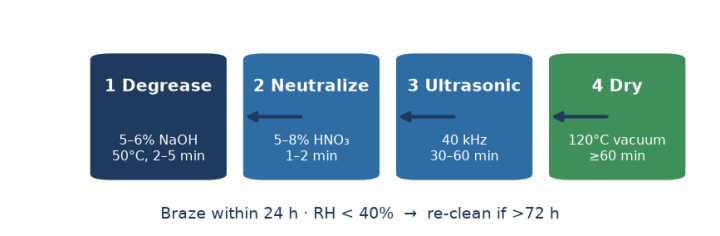
Figure 3 — Four-step pre-braze cleaning process
3. Assembly and Tooling: Gap and Flatness Decide the Joint
- **Fin-to-plate gap ≤ 0.05 mm.** Side bars flush with fins, no step.
- **Stack misalignment ≤ 0.5 mm/m** — otherwise local gaps exceed spec.
- **Fixture flatness ≤ 0.03 mm/m** to prevent post-braze warping.
- **Clamping pressure uniform, 0.8–1.2 MPa.** Too loose → gaps open; too tight → crushed flow channels.
- **Loading:** vertical/horizontal support, multi-point load bearing for large cores; ≥ 50 mm spacing between loads for a uniform thermal field.
A fixture is not just a clamp. It is a thermal tool that keeps the stack flat while the aluminum softens.
4. Vacuum and Temperature Profile: Braze What the Core Sees
Vacuum protects the joint from oxidation; the temperature profile decides whether every part of the core reaches the brazing window together.
**Vacuum requirements:**
- Cold pre-pump: ≤ 5×10⁻³ Pa
- High-temperature soak: ≤ 1×10⁻² Pa
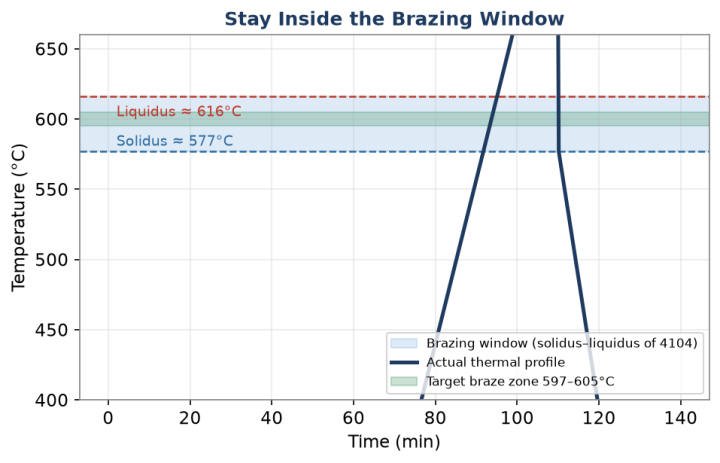
Figure 4 — Brazing window: solidus ≈ 577°C / liquidus ≈ 616°C of 4104 filler; profile must stay within target zone 597–605°C
**Five-stage thermal profile (locked into our process cards):**
| Stage | Range | Rate | Soak |
| 1 | RT → 200°C | 10°C/min | 60 min — drive off water / low boilers |
| 2 | 200 → 400°C | 8°C/min | 90 min — deep degassing |
| 3 | 400 → 530°C | 6°C/min | 120 min — uniform preheat |
| 4 | 530 → 597–605°C | 5°C/min | 3–6 min — critical brazing window |
| 5 | Furnace cool | N₂ purge ≤ 8°C/min below 400°C | — |
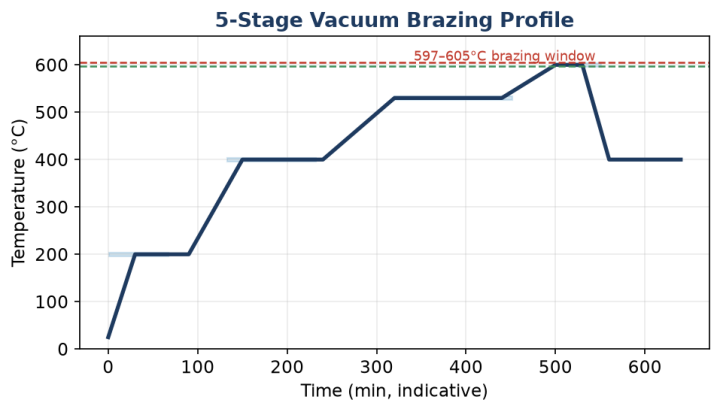
Figure 5 — Five-stage temperature curve with soak platforms
Target: filler fully wets, no over-melt erosion, **core temperature spread ≤ ±3°C**.
Two hard rules:
- Over-temperature (>610°C) or over-soak (>10 min) → fin erosion, micro-porosity leaks.
- Under-temperature (<595°C) or short time → incomplete bonding, cold joints.
5. Post-Braze Inspection: Close the Loop
- **Visual:** no distortion, warping, or cracks; braze fillets continuous and bright, no voids.
- **Hydrostatic:** 1.5× design pressure, hold 30 min, zero seepage.
- **Helium leak:** ≤ 1×10⁻⁹ Pa·m³/s for high-reliability applications.
- **Metallography (spot):** fillet full, no gas holes/slag; erosion depth ≤ 70 µm; uniform grain.
Inspection data feeds back into the process card. Leaks clustering at edges? Your fixture or profile has a pattern — fix it at the source, not by rework.
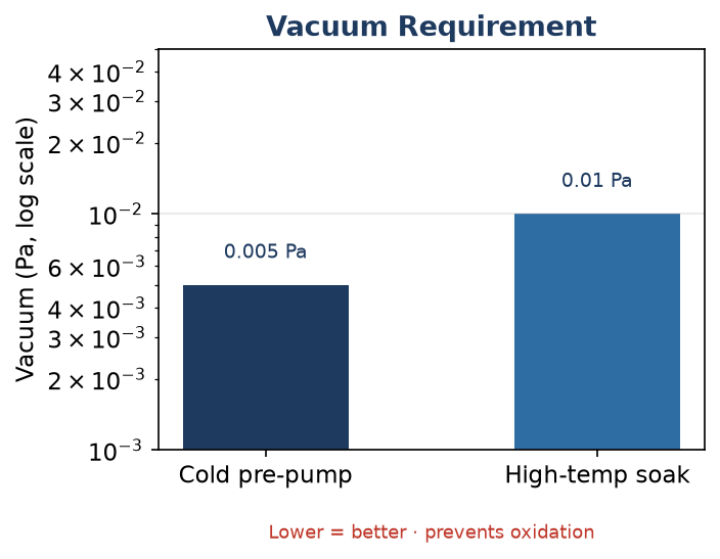
Figure 6 — Cold vs high-temperature vacuum requirements
Common Defects and Their Countermeasures
| Defect | Likely Cause | Fix |
| Incomplete brazing / cold joint | Low vacuum, low temp, large gap | Check seals, calibrate furnace, tighten gap control |
| Fin erosion | Over-temp / over-soak | Peak 600±3°C, soak 3–6 min |
| Distortion / warping | Uneven fixture, no support | Flatten fixture, add support, control ramp rate |
| Porosity | Poor cleaning, insufficient drying | Stronger ultrasonic, longer dry |
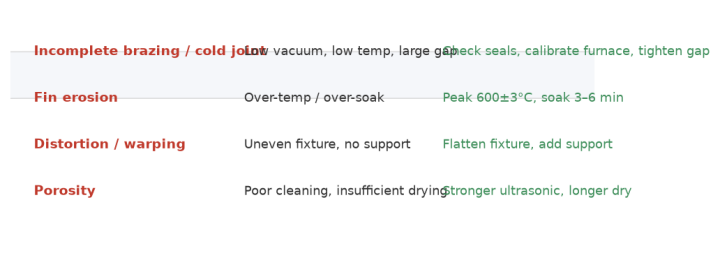
Figure 7 — Defect-to-fix mapping
Sustaining It: Process Control
- **Furnace calibration:** 9-point survey every 3 months; empty-furnace spread ≤ ±3°C.
- **Batch records:** material lot, cleaning params, curve data, test results — fully traceable.
- **Trained operators:** certified, familiar with the parameter window and defect recognition.
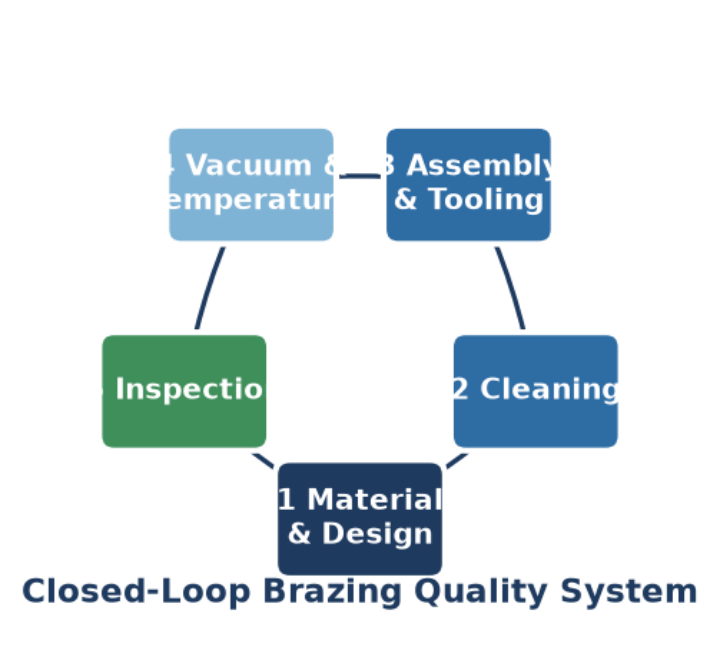
Figure 8 — Five-point closed-loop quality system
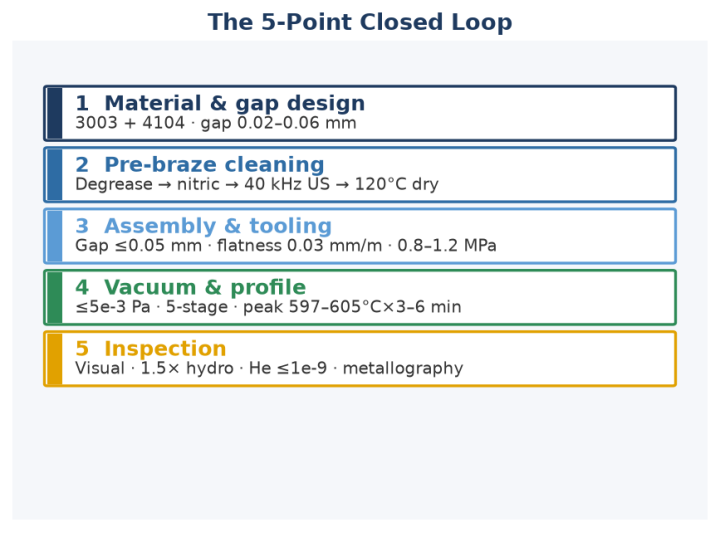
Figure 9 — Quick-reference checklist: all 5 controls at a glance
Conclusion
Brazing quality in aluminum heat exchangers is not a mystery and not luck. It is five controllable links — material, cleaning, assembly, thermal profile, inspection — executed every batch. Control all five and rejects fall to a statistical floor.
Specifying an aluminum plate-fin heat exchanger that has to pass the first time? Talk to our engineering team for specifications →